
History of Borgo Santolina
Our History
For over eight centuries, Borgo Santolina has provided shelter to its guests.
Borgo Santolina was built in 1206 as part of a small medieval village connected to Castello di Tocchi. It was home to farmers, iron workers, and charcoal makers who supported the nearby fortress, which protected the valuable salt trade route between Siena and Grosseto. The region saw constant tension between Siena and Florence, and its position between the Maremma coast and the Chianti hills made it both strategic and difficult to defend.
In 1391, the ruling noble family tried to trade Castello di Tocchi to the Florentines to assure their own power in the region, and rather than risk letting the fortress fall into Florentine hands, the Republic of Siena marched on their own castle. They tore down the walls, destroyed the trading route, and the nobles fled, disgraced.
But the families and farmers, many who had lived there for generations, decided they would rather stay undefended than abandon their ancestral homes. They used the stones that once served as a military defense to rebuild, to make new barns and forges, and over time the area became a largely undisturbed and peaceful farming community surrounded by vast forest that remained faithful to its humble roots for centuries.
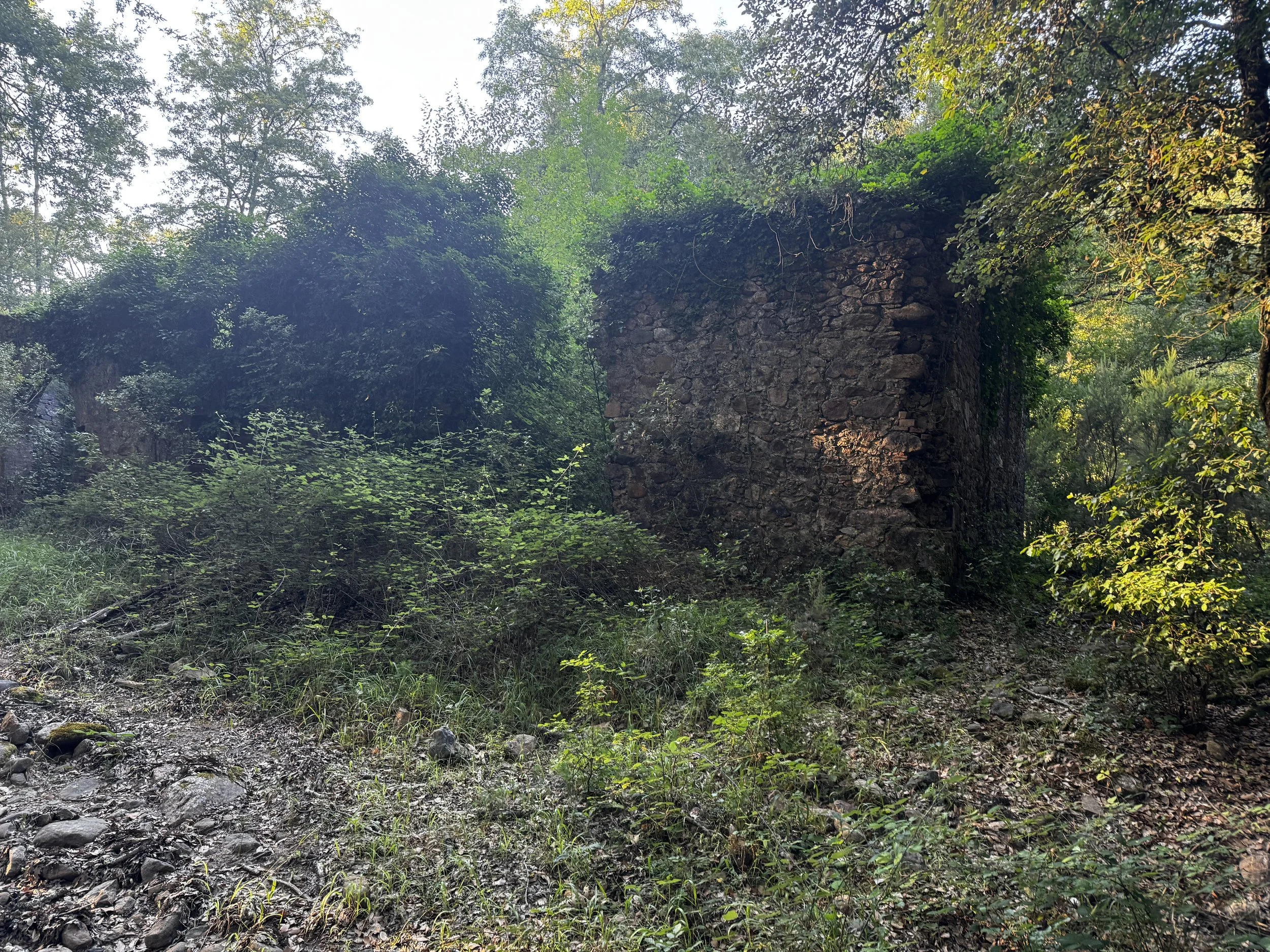
Borgo Santolina existed as a small borgo of just a few farming families until the early 1900s, when the remote nature of Castello di Tocchi meant many moved to the larger, more cosmopolitan towns looking for work. Slowly, it fell into complete ruin, until the 1990s, when it was rediscovered by the Cambria family on a long afternoon horseback ride. They saw the stone walls jutting from the overgrown forest and saw in its future a place that could celebrate Tuscan culture and hospitality, as well as the natural world of the Val di Merse, and set about restoring and revitalizing the property.
Today, Anna Cambria continues to lead the estate as manager. In 2025, ownership passed to four friends who were inspired by what the Cambrias had created and now remain committed alongside Anna to carrying that vision forward, honoring the history and natural setting while combining the heart of Italian farming with 21st century comforts and accommodations. Here, we invite you to travel slowly and discover the true authentic Tuscany, and rediscover the lost art of lingering.
Welcome to Borgo Santolina.